


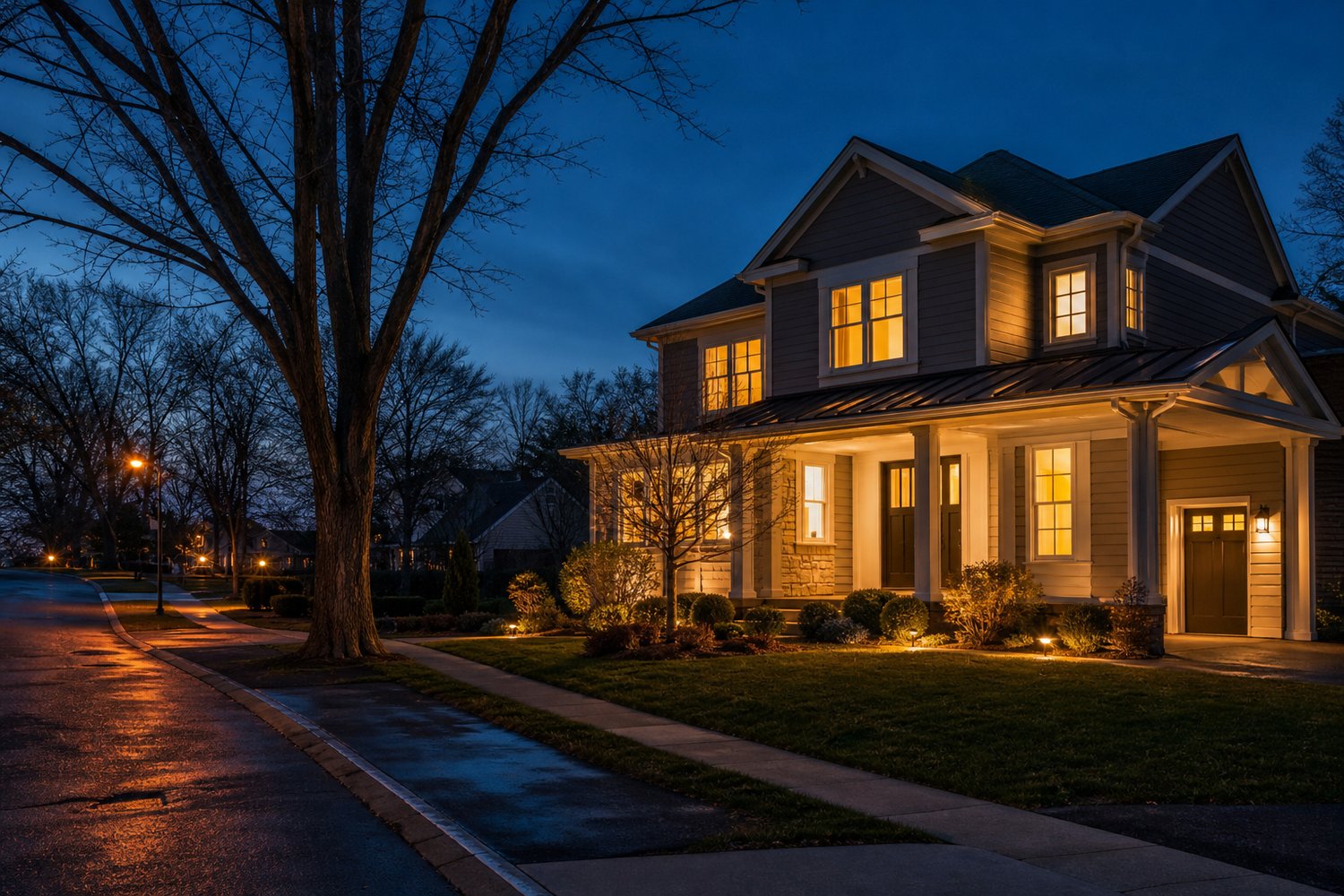
What should you do after getting outbid on a Capital Region home?
Review what actually decided the outcome: price, financing certainty, contingencies, or timing. Then refresh your pre-approval and set a firm price ceiling before the next showing. Being outbid on a Capital Region home is frustrating, but it only costs you more if you answer it by stretching past a sound budget.
Key Takeaways
- Single-family and other home types sold in Delmar from July to September 2026 averaged 108.0% of list price, and 82% sold above list, so an offer at asking was often not the winning offer.
- Delmar homes sold July to September 2026 took a median of 6 days from listing to going under contract, which means your next chance can come and go quickly if your paperwork isn't ready.
- A September 2026 media report attributed to the Greater Capital Association of REALTORS® put regional pending sales at 1,060, nearly 10% above September 2025.
- Price is only one reason an offer loses; financing strength, contingencies, closing date, and appraisal language can each tip a decision.
- Set your maximum price and maximum monthly housing cost before you see the next home, and treat any escalation instruction as subordinate to that ceiling.
What should I do first after losing an offer on a Capital Region home?
Do three things in the first few days: ask for whatever feedback the listing side will share, review your own offer against a written checklist, and call your lender. Doing this while the details are fresh turns a loss into a better next offer.
Ask what you can learn, and accept what you can't
I ask the listing agent what they're able to share. Sometimes that's very little. You may learn that the winning offer was higher, or you may learn it won on terms. Don't assume the highest dollar amount won, and don't assume you were short on price. No local dataset I could find isolates how often price, financing, or terms decide a winner, so treat any confident explanation from someone who didn't see the offers with caution.
Run a written offer-review checklist
Pull out your offer and write down each of these:
- Offered price and any escalation terms
- Financing type and the strength of your down payment
- Appraisal language, including what you would do if the appraisal came in low
- Inspection provisions and any concessions you requested
- Closing-date and possession flexibility
- Offer expiration
Then ask your agent which of the winning terms were disclosed and which stay unknown. This is the kind of review I walk my clients through after every lost offer, and it takes about an hour. If you don't have an agent yet, the buyer agency agreement post explains what working with one looks like in New York.
Have your real estate attorney look at any contract changes
In New York, your real estate attorney handles contract review and the closing. If you're thinking about changing contingencies or contract language to be more competitive next time, run it past your attorney before you commit. Loosening protections can lower your risk of losing and raise your risk of owning a problem.
Why do offers lose in the Capital Region, and what does Delmar show?
Offers lose because the market is moving faster than many buyers expect, and winning offers often differ on more than price. Recent local market data for Delmar shows how competitive a single-town market can get.
| Measure (Delmar, all home types sold July to September 2026) | Result |
|---|---|
| Median sale price | $504,859 (versus $427,000 in the same window a year earlier) |
| Average sale price as a share of list price | 108.0% (versus 104.2% a year earlier) |
| Homes sold above list price | 82% |
| Homes under contract within two weeks of listing | 71% |
| Median days from listing to going under contract | 6 |
| Months of supply | 1.1 (versus 1.0 a year earlier) |
| Homes sold | 23 (versus 27 a year earlier) |
These are area-level figures. An individual home's value depends on condition, street, build year, and timing, so use them as context, not as a price for any one house.
What does this mean if you offered the asking price?
An offer at list price in a market where homes averaged 108.0% of list can lose on price alone. But the same numbers show that 22% of listings had a price cut (averaging 4.8%), so not every home gets bid up. Each house follows its own pattern, and I price and advise on offers from the specific comparable sales, not from a town average.
Is the region-wide picture any different?
A September 2026 report in The Saratogian, attributed to the Greater Capital Association of REALTORS®, said Capital Region inventory reached 2,590 units, up 3% from the prior month, while pending sales reached 1,060, nearly 10% higher than September 2025. That's a regional snapshot worth confirming against the association's own report. It tells you competition across the Capital Region is not easing everywhere at once.
Albany, Troy, Schenectady, Saratoga Springs, Clifton Park, and smaller communities in Rensselaer and Schenectady counties differ in property taxes, commuting patterns, housing stock, and renovation needs. So compare recent accepted-offer feedback for the specific municipality you're shopping in, not a regional average. For my latest read on the region, see my October 2026 market update.
Does reading the seller's side help?
It can. Sellers who draw several offers tend to compare more than price, and my post on how sellers attract multiple offers shows what that looks like from the other chair.
How do I set a ceiling and keep my pre-approval current before the next offer?
Confirm your pre-approval with your lender, then decide your maximum price and maximum monthly housing cost before you see the next property. Do both before emotion enters the picture.
Refresh your pre-approval
Ask your lender to confirm that your income, assets, debts, interest-rate assumptions, loan amount, and property type are all still accurate. A current pre-approval lets us move quickly when the right Capital Region home appears, which matters when homes in Delmar went under contract in a median of 6 days. My earlier post on getting pre-approved before touring covers the basics.
Keep in mind that a pre-approval is not a guarantee of final underwriting or appraisal approval. It's the most a lender may be willing to lend, not the amount you should spend.
Build the ceiling from your life, not the loan amount
Write down two numbers:
- The maximum purchase price you'll pay, period.
- The maximum monthly housing cost you can carry, including taxes, insurance, maintenance, and any association charges.
If an escalation clause or a counteroffer would take you past either number, the answer is no. A September 2026 Capital District Regional Planning Commission report found that whether a median-priced home is affordable depends heavily on county and on the report's own income, interest-rate, and down-payment assumptions. Your numbers will differ from any report's assumptions, which is why you set them yourself.
Separate negotiable terms from your financial limit
Closing date, possession timing, and some contingency structures may be negotiable. Your affordability limit is not a bidding term. If a loss makes you want to offer more next time out of frustration, that's the moment to lean on the written ceiling.
Will waiting cost you?
Possibly, but renting isn't a free pause either. The Capital District Regional Planning Commission reported one-bedroom Fair Market Rent in the Albany, Troy, and Schenectady area rising from $1,230 in 2025 to $1,417 in 2026, a 15% increase. That's rental context, not a home-sale statistic, but it's worth weighing as you decide how long to keep searching. Recent local market data also showed 17 homes for sale in Delmar, with 8 new listings in the prior 30 days, so new options do appear.
Your exact limit depends on your income, savings, loan type, and the property. That's where a conversation with me and your lender gives you a number you can trust.
If you'd like to see what past clients say about working with us, you can read my reviews on Google and Zillow.
FAQ
Why did my offer lose if I offered the asking price in the Capital Region?
Because asking price is often the starting point, not the winning number. In Delmar, all home types sold July to September 2026 averaged 108.0% of list price, with 82% selling above list. Financing strength, contingencies, and closing timing can also decide it.
Should I raise my offer after getting outbid on an Albany-area home?
Only if the new number is still inside the ceiling you set before the bidding started. If the home has already gone under contract, there's usually nothing to raise. Use the loss to refine your limit and move on to the next property.
How do I find out whether the winning offer was higher than mine?
Ask your agent to request feedback from the listing agent. You may get the price, the terms, or nothing at all, and some details won't be shared. Don't build your next strategy on an assumption about what won.
Does a stronger pre-approval help when competing for a home in Saratoga County?
It can, because financing certainty is one of the things a seller weighs. A current pre-approval with verified income and assets shows you can close. It still isn't a guarantee of final underwriting or appraisal approval, so don't treat it as permission to exceed your budget. Competition in Saratoga Springs and Clifton Park can differ from town to town, so I look at local comparable sales for each offer.
Should I waive an inspection or other contingency to win a Capital Region house?
Not as a reflex. Contingencies are how you manage risk, so any change should be reviewed by your real estate attorney before you commit. Closing-date or possession flexibility is often a safer way to strengthen an offer than removing protections.
Can my attorney review the terms of a competing offer after I lose?
Usually you won't see the competing offer, so there's nothing for your attorney to review. What your attorney can do is review your own terms and any changes you're considering for the next offer. Bring them in before you submit, not after.
Your next offer starts with the one you lost
A lost offer shows you where price, financing, or timing fell short, and the best response is a current pre-approval and a ceiling you won't cross. I price homes with data, and the same approach applies when we build your next offer. If you'd like to sit down and review your last offer, schedule a consultation with me or request a free home evaluation if you're also thinking about selling.